The topic of the latest issue of TWISTER, the magazine of our study association, was “Onion”, and this article was my contribution to the issue. I’m also writing a course paper on this subject, but more on that later. For now, enjoy the article:
In many modern cuisines, cooking a dish usually starts with preparing an aromatic base. The French have their mirepoix, the Spanish and Italians their sofrito and soffritto, and in Russia we call it zažarka, and there are many others. The list of ingredients in these aromatic bases differs from country to country, but nearly all of them contain alliums – onions and/or garlic.
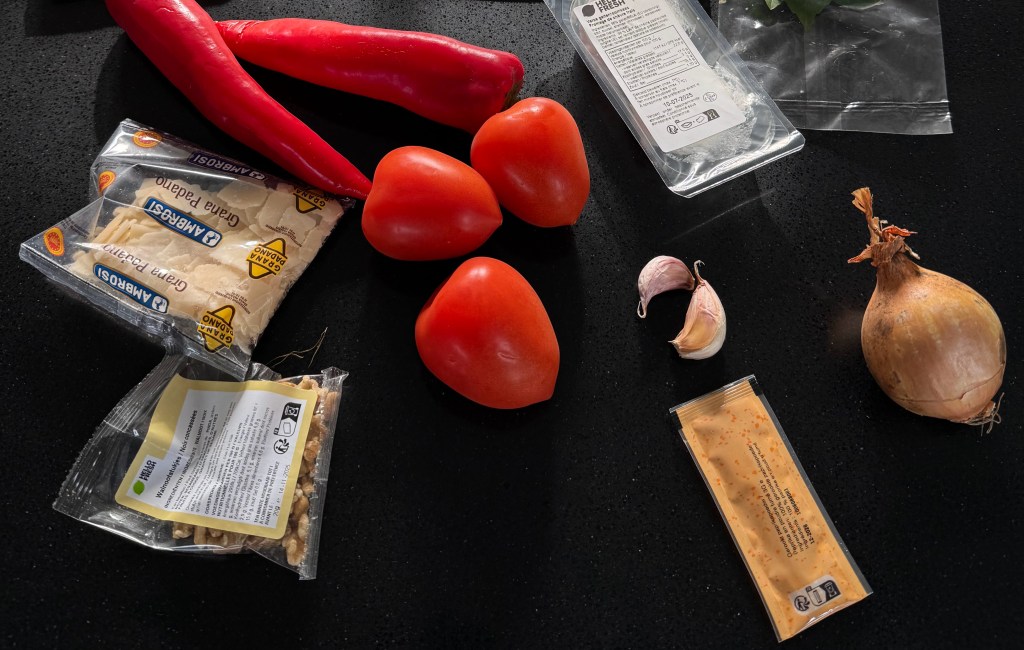
If these ingredients are so common across Europe, how far back can we reconstruct them? Did Proto-Indo-Europeans also start cooking their meals by frying up a bunch of diced onions?
One of the oldest cookbooks that we have from Roman times is “De Re Coquinaria” by Apicius. The manuscripts we have today date to the 5th century CE, but many recipes in the collection likely date back to earlier times. The cookbook clearly describes meals of rich Romans, and the recipes use many exotic ingredients and imported spices, but onions and leeks feature no less prominently than in the cookbooks of today.
In Homer, the onions are mentioned only once in relation to cooking: in the Iliad, 11.630, we find κρόμυον ποτῷ ὄψον krómuon potṓi ópson ‘an onion, a relish for their drink’. This is clearly not the same use as in mirepoix and sofrito.
In Classical Greece, onions were considered a characteristic part of a soldier’s diet – Aristophanes makes jokes about it in the comedy “Knights”. As we can find out from the remaining fragments of the poem Hedupatheia by Archestratos of Gela, telling us where to find the best food in the Mediterranean world, the finest cuts of meat or fish are best consumed on their own, without any seasoning or condiments. But there’s no doubt that alliums were known and used in cooking.
In Avesta, onions and garlic are not mentioned at all, and in Sanskrit, some of the earliest attestations of words for onion and garlic (dating to the 3rd century BCE, much later than the Rigveda) appear in texts that prohibit eating them. Clearly, the need for prohibition indicates that people did know and consume alliums, but it’s not possible to say more about their role in the cuisine.
In Hittite texts, onions and garlic are only mentioned in ritual context, so we cannot make any conclusions on how they were used in cooking. But we do have the words, so it’s reasonable to assume that the vegetables were also used.
We can’t go any deeper in the past if we stick to written sources, so if we want to understand something about the Proto-Indo-European state of affairs, we need to use linguistic reconstruction. Let’s jump back to the present and start our journey there.
The regular English word onion, as well as the French oignon, ultimately go back to the Latin uniō. The Dutch, in their love for monosyllabic nouns, have reanalyzed the -on in oignon as a variant of the plural ending –en and built a quasi-singular form ui from the remaining part of the word.
The words in other major European languages – Spanish cebolla, Italian cipolla, German Zwiebel – go back to the other, more common Latin word for onion, cēpa.
Finally, the Russian, Bulgarian and Serbo-Croatian luk is a borrowing from the Germanic root that appears in the German Lauch and English leek. The root has no certain etymology, but is typically connected with the word lūkan ‘to close’, which gave us English lock. The logic of the connection is that the stem of an onion or garlic is enclosed with the outer leaves.
So where do the Latin words come from? For cēpa, the answer is simple: we don’t know. Hesychius, who compiled a lexicon of unusual and obscure Greek words, gives us the word κάπια kápia, which seems to be related, but that is all we have.
For uniō, we have two answers, one straightforward and likely wrong, the other relatively obscure and unfortunately also uncertain. The simple answer is that it comes from ūnus ‘one’: unlike a head of garlic, an onion grows as a single large bulb. The obscure one, suggested in a 2006 article by Krzysztof Tomasz Witczak, connects it to the Hittite words for onion and garlic: šuppiwašḫar literally ‘pure garlic’ and wašḫar ‘garlic (?)’. He reconstructs a so-called heteroclitic stem for Proto-Indo-European, with the nominative form *u̯ósHr̥ and genitive *usHn-ós, and derives the Latin form from the genitive *usn-. In my view, the reconstruction is doubtful: if this is such an ancient root, why is the Latin word first attested in Columella’s writings in the 1st century AD? I can’t see how the sound changes work, either (did you notice the disappearing H?), but I’ll refer you to my fthc. “Methodology of Comparative Indo-European Linguistics” paper for a more detailed analysis.
The last onion word we need to discuss is the one from the Iliad, κρόμυον krómuon. The word has multiple cognates in modern languages, including the English ramsons and Russian čeremša with the same meaning. However, its origin is also unclear, and the irregular alternations between the variants of the Greek word (κρέμυον, κρόμμυον) indicate that, like many other words related to plants and agriculture, this could be a loanword from the Pre-Indo-European substrate.
Now to garlic. The English word is a compound of the Old English gār ‘spear’ and the lic that we have already discussed, the one in leek and Lauch. (By the way, the same gār also appears in the third word of Beowulf, Gar-Dena ‘Spear-Danes’. Maybe those Danes just had bad breath?). The same leek/Lauch root appears in the German knoblauch and Dutch knoflook.
The Romance words (French ail, Italian aglio, Spanish ajo) all go back to the Latin alium, later spelled as allium. Further connections of this word are unfortunately unclear. Mallory and Adams 2006 (“The Oxford Introduction to Proto-Indo-European and the Proto-Indo-European World”) cite it as one of the two roots for vegetables that can be reconstructed to Proto-Indo-European, based on the connection with Sanskrit ālúḥ, some kind of bulb or root vegetable. However, Proto-Indo-European constructions are usually considered robust if cognates exist in at least three language families. The “Indogermanisches etymologisches Wörterbuch” connects it to the root *alu- ‘bitter’, which it reconstructs as the origin of the English word ale among other cognates, but this reconstruction is not universally accepted.
Finally, the Russian česnok appears to be derived from the word česat’ ‘to scratch’, apparently because the motion of splitting a head of garlic into cloves resembles scratching. Does this make sense? Not to me! But that’s what the dictionary says.
So did the Proto-Indo-Europeans cook with onions and garlic? I’m pretty sure they did. Garlic is native to Western and Central Asia, which is pretty close to the Proto-Indo-European homeland. The origin of onions is uncertain, but the same region is a likely candidate, and they clearly have been cultivated for millennia. And most people want flavor in their food, and there are not that many flavorful plants that were available locally and easy to cultivate. As for the words, we can see how easily the names of the plants have been borrowed and new names have been created in languages with well-known history, so there’s no doubt that the same processes went on in the prehistory.
And may you always eet smakelijk! 🙂


Leave a Reply