Let’s start with a general life update this time: we now officially live in Leiden! The move went smoothly, and now we’re offically registered as Dutch residents. Right now we’re putting the very last finishing touches on the apartment, and we’ve already had our first guests. And I’m still as much in love with the city as I was when I visited it for the first time last summer; a 15-minute daily walk to the university through the beautiful city center and along the channels makes sure you don’t forget how nice it is.
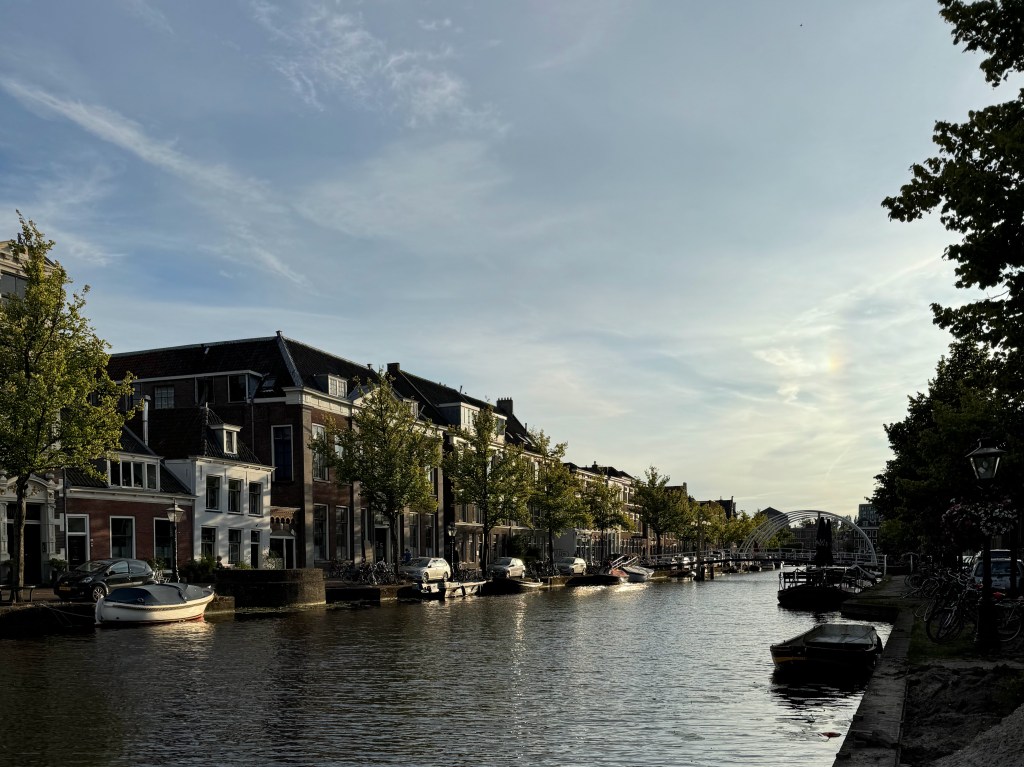
Now to the reason why we planned the move for this specific time: Leiden Summer School of Languages in Linguistics, which I now attended for the second time. The main difference I felt compared with the last year was that we had much less homework. This was quite fortunate on one hand, because dealing with the classes, the move and the homework would have been too much, but on the other hand I did feel that I didn’t learn as much because I wasn’t actively working on the material. Also, unlike last year, I didn’t really have any energy to actively make acquaintances with new people, so I skipped most of the social events and mostly hung out with people I knew from last year (hi, Adriana!). I did get to know a couple of folks who are currently studying in Leiden, which was definitely useful.
The first course of the day was Sabellic languages, taught by Prof. Weiss. Sabellic languages are Oscan, Umbrian and South Picene – languages related to Latin which were spoken in ancient Italy before Rome took over everything. The class started with a discussion of the historical phonology of Oscan and Umbrian, and then we went into an in-depth word-by-word analysis of several inscriptions. I originally had thought that it would be “the easy class”, because I still know Latin quite well and I had already encountered Oscan and Umbrian, and I had hoped to be on familiar ground. In fact, the depth of analysis, connecting both the etymology and the morphology of every word to Proto-Indo-European, with examples of related words in everything from Vedic Sanskrit all the way to Modern Icelandic, made it anything but easy. I did enjoy the class a lot, even though it’s hard for me to judge how much I actually learned – right now it feels like I’m strewing the floor with puzzle pieces of knowledge which will all fall together at some point but still feel quite disjointed. I’ve signed up for an extra credits project, which entails doing a detailed analysis of a recently discovered inscription, and I already feel that putting these pieces of knowledge to practical use will be extremely valuable.

The second course I took was Sogdian, taught by Prof. Durkin-Meisterernst, and I have to say I dropped it. I knew almost nothing about Sogdian when I signed up, except that it was spoken in places I once visited, Samarkand and Bukhara. I had hoped that it could be a nice introduction to the Iranian languages, which I knew nothing about, but it turned out to be a very poor choice for this purpose, because of the consonant-only writing system making it hard to understand how words actually sound, and because the language is not all that well understood. The course started with a brief introduction to the grammar, without any discussion of how it fits into the bigger Indo-European picture, and then proceeded to the texts. With my lack of background in Iranian languages, and at the speed we were going, I was only able to mostly figure out the meanings of each word, but not their forms, and definitely not anything more generally interesting from the linguistic point of view. As I wasn’t learning much in class, I decided not to continue.
The course I took as a replacement was Old Frisian, taught by Prof. Bremmer, which Adriana highly recommended. With my knowledge of Old English, it was relatively easy for me to join the group in the middle of the course, and it was definitely much more fun than Sogdian. It was nice to learn about one more flavor of Germanic, and I had a good chance to exercise Etymograph for working on the translations. And the group taking the class was definitely the most friendly.
The third course was the historical grammar of Sanskrit, taught by Prof. Lubotsky. I had been quite concerned that not knowing Sanskrit would make the class hard to follow, but in fact the only part where I was feeling lost was the discussion of verbal morphology. Instead, the difficult part was caring about the material. I’m sure that the syllabus will be a very useful reference later on, after I learn Sanskrit more, and I plan to do the suggested exercises, but for now I can’t say that the course resonated with me.
The final course was the one I was most looking forward to – Prof. Stifter on Old Irish. I was curious about the language for a long time, and even more after last year’s Scottish Gaelic course, where a lot of weirdness was explained with “it will make more sense if you study Old Irish”. The course did not attempt to teach us the actual language, and instead focused on a more realistic task for a two-week time frame: explain how exactly the weirdness of Old Irish works and how it came to be. We started with looking not at the language but rather at the history: when and how the speakers of Celtic languages could have come to Ireland, and what could have caused Old Irish as we know it to be so homogenous in terms of dialects. Then we covered phonology and morphology, a lot of which was familiar to me from Scottish Gaelic. The second week of the course was dedicated to morphology, and explained in detail how regular sound changes could turn very Latin-looking paradigms of Proto-Celtic into the weirdness of Old Irish. The course definitely met all my expectations and will be very useful for me as an Indo-Europeanist if I will need to reference Old Irish material.
Now I have an interesting new use case to apply Etymograph to: while implementing Old Irish grammar rules synchronically is most likely to be infeasible, the diachronic implementation should be straightforward enough to try, and I’m curious to see whether it can deliver some useful results.
All in all, I enjoyed the summer school a lot. This is a unique opportunity to get almost a semester’s worth of knowledge in just two weeks, and I definitely plan to attend it again.
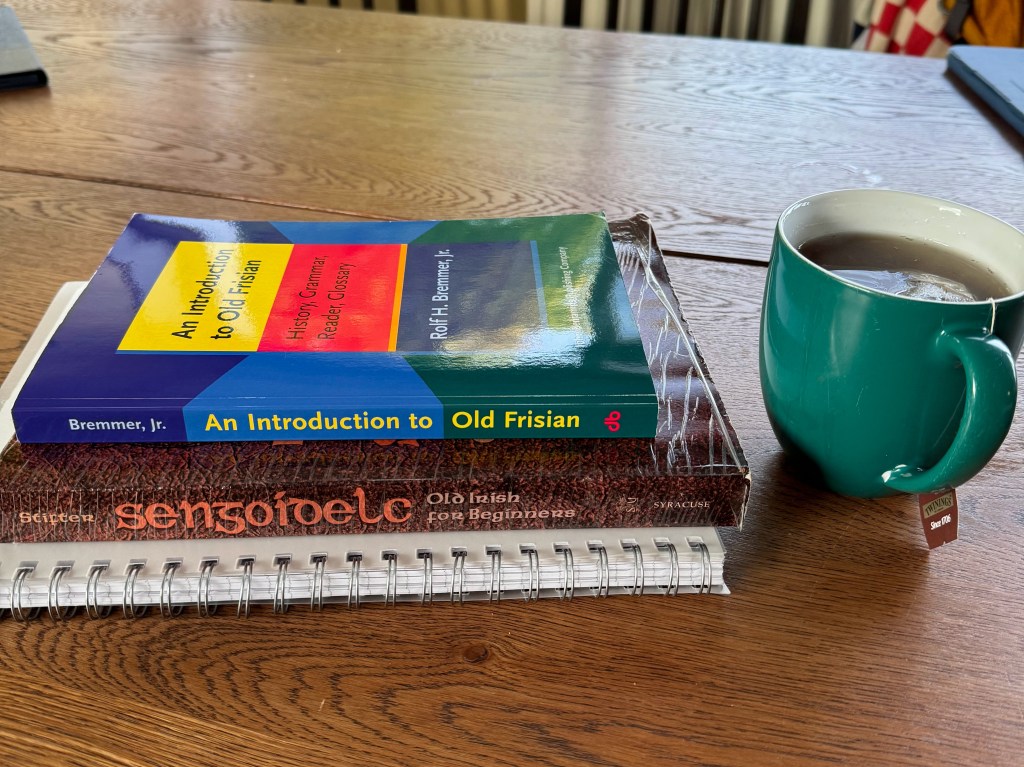
In August, I hope that I’ll finally get some rest after the stress of the move and the summer school, and not get sucked into some new linguistic rabbit hole. See you in September!

 yole's journey in languages
Leave a comment