The Leiden University news of the month is that I’ve once more registered for the Summer School. The courses I’m taking these year are Sabellic languages, Introduction to Sogdian, Historical grammar of Sanskrit and Old Irish. The Sabellic languages are the closest relatives of Latin, spoken in parts of Italy before Latin took over, and I’m already somewhat familiar with them from my study of the history of Latin, so this course shouldn’t be too hard. The Sogdian course should give me an introduction to the Iranian branch of Indo-European, which I currently know nothing about. (And I’ve been to Samarkand and Bukhara, where this language was spoken, so there’s a bit of personal connection through that.) The Sanskrit course is the one I have the most reservations about – it’s definitely required knowledge for me as a future Indo-Europeanist, but I’m not sure whether I’ll be able to learn enough Sanskrit by myself in order to be able to follow the course at this time. And finally, Old Irish is something that I’ve been long curious about, and the Scottish Gaelic course I took last year piqued my interest even more.
The focus of my personal research was, as planned, on Etymograph. I decided to put aside my attempts to learn Old Norse while encoding its grammar in Etymograph, as it was sufficiently close to Dutch to risk getting some of the details mixed up in my head. Instead, I focused on the area where I see the most potential for Etymograph to be genuinely useful in research: building a DSL for expressing sound correspondences between languages.
As usual, I started with Quenya and Sindarin, which have a big advantage: Paul Strack has already done the job of expressing the sound rules in a formal notation as part of his work on Eldamo. Bringing this over to Etymograph went quite well, so I tried my hand at a more real-world task: modelling the sound changes between Proto-Germanic and Old English, following Don Ringe’s description in The Development of Old English. This task is quite challenging; an easier starting point would have been the Latin to Spanish sound changes, which are more straightforward and much more familiar for me. However, I just find working on Old English to be more fun. And even though I do spend a lot of my time feeling overwhelmed by the complexity, I believe that I’m making consistent progress, the DSL is evolving nicely, and none of the challenges seem insurmountable. What I have so far is very much work in progress, but I’ll keep pushing forward in the coming months.
On the study side, I started looking into Sanskrit. The book I’m learning from fairly quickly switches from transliteration to pure Devanagari, and I have to say that almost all of my initial burst of energy got expended on learning the script, with not much left for the language itself. And I still get stumped by ligatures on a regular basis. However, as I have an actual deadline (the beginning of the summer school) and a rough idea of what I need to know by that time, this should be enough motivation to continue.
In addition to that, I’ve started reading about the history of the Ancient Near East. I am more or less familiar with Egypt, Greece and of course Rome, but everything else was extremely vague for me. And when reading almost any old texts, understanding who wrote to whom about what is quite essential to be able to make sense of them.
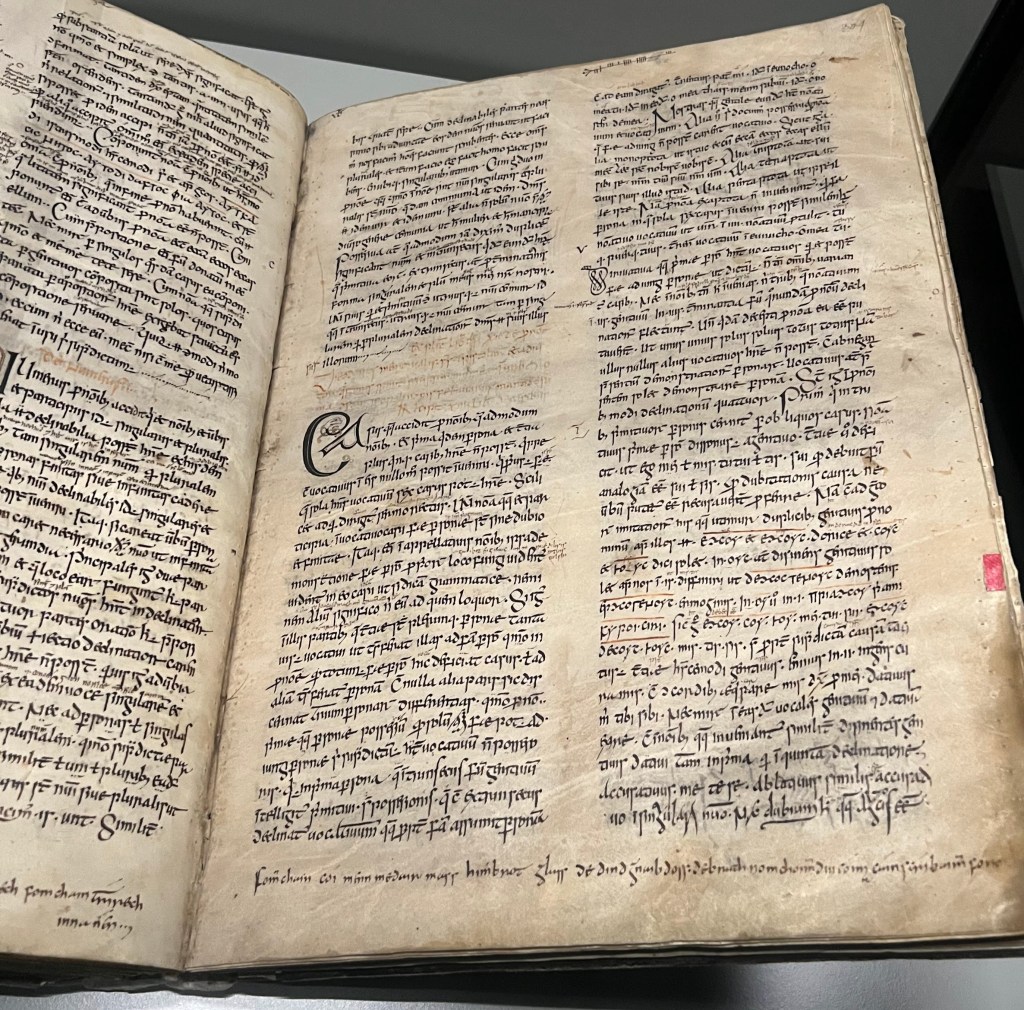
On a more personal side, March was for me the month of geeking out about libraries. First, we went to see the St.Gallen library, to which we owe the preservation of a good deal of our knowledge of Old High German and, surprisingly enough, Old Irish (contemporary sources from Ireland didn’t survive, and St.Gallen was one of the places where Irish missionaries brought their Latin manuscripts with Old Irish glosses).
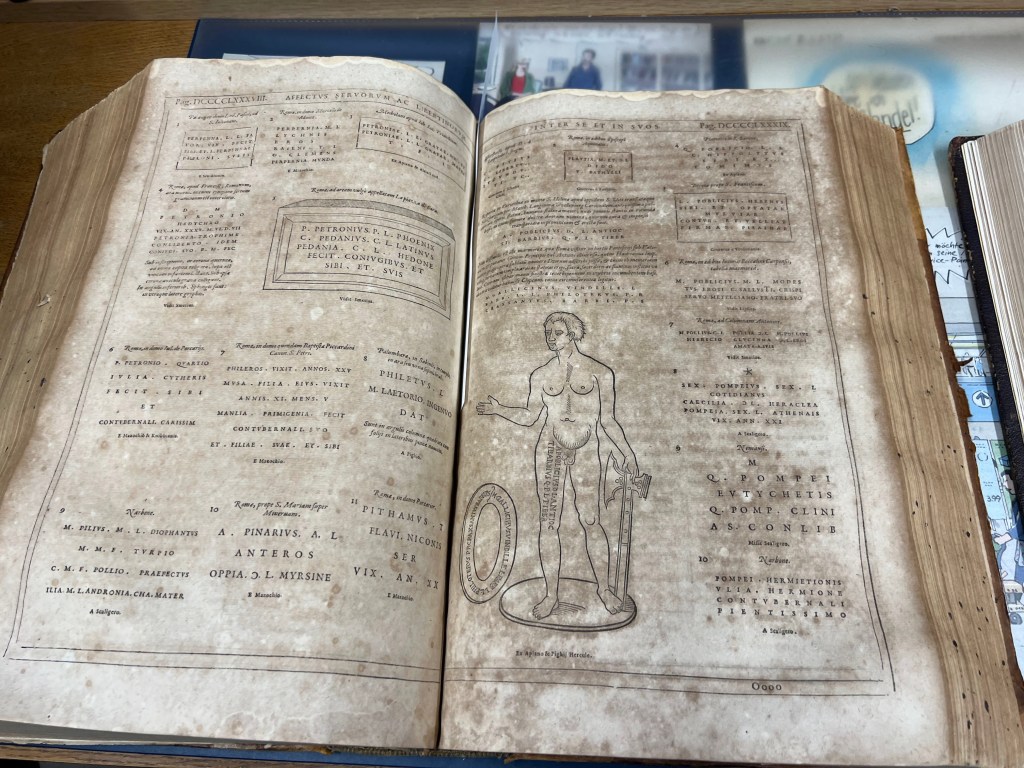
And second, I went to the open day of the Berlin State Library. This was a great opportunity to see everything about how a big library works – how books are kept, retrieved, restored, scanned – as well as many interesting old books. I also got to see how the Corpus Inscriptionum Latinarum is being worked on – such a pity that I had to run to catch the next tour, and didn’t have enough time to ask more questions about the work!
For April, I have significantly more travel planned, so there won’t be as much progress, but I’ll try to do what I can. See you next month, or, as they say in Dutch, tot ziens!

 yole's journey in languages
Leave a comment